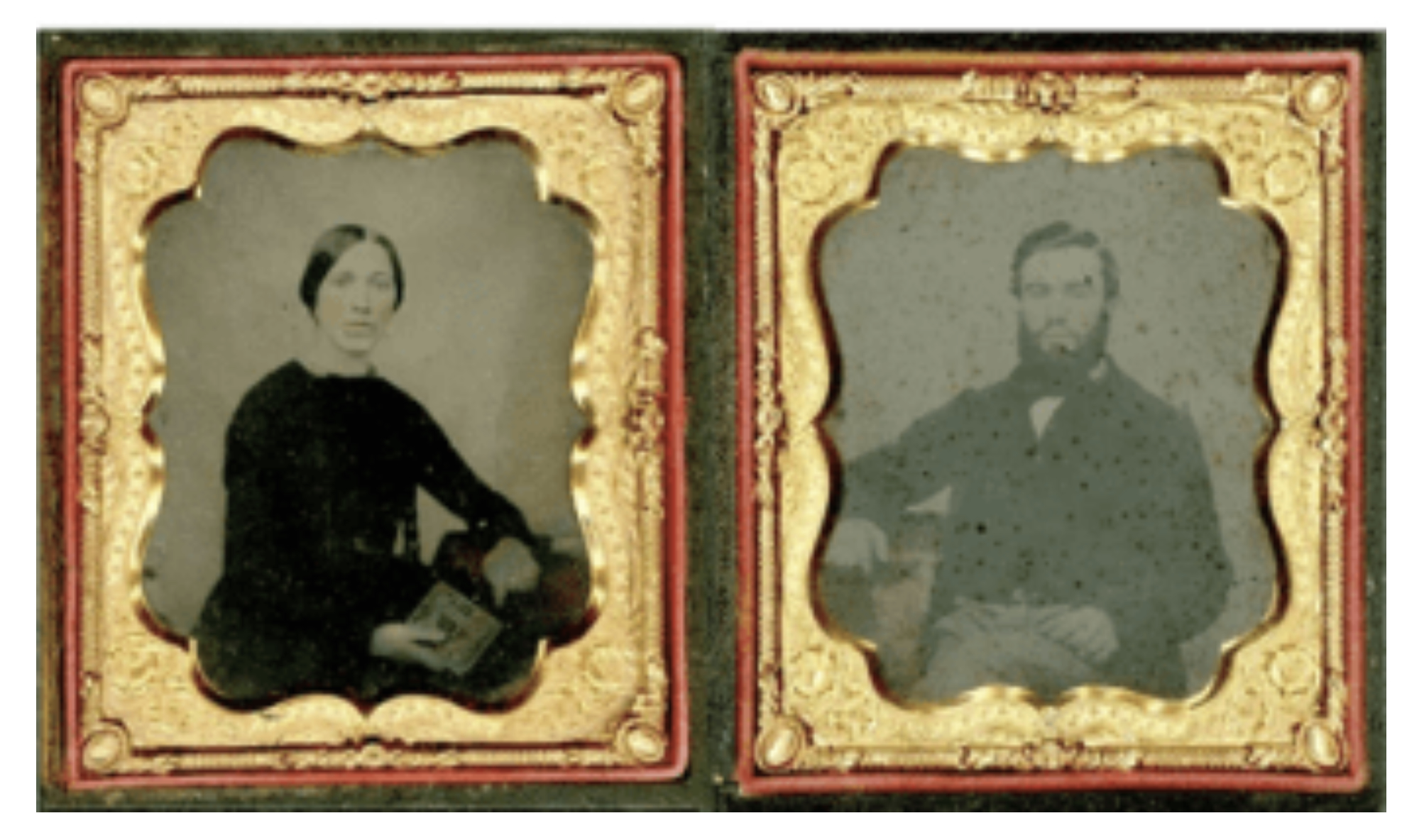
Roseltha Wolverton Goble, a farm woman from near Woodstock, Ontario, pictured here with her husband Jasper..
1 media/goble_thumb.jpg 2026-11-13T03:03:38+00:00 Daniel Samson e78c44be69204bf85874703732765155352152aa 52 1 Roseltha starts a diary to record her feelings and manage the household for her father who ran a saw mill in Wolverton. When she marries in 1858, she and Jasper ran a farm on Lot 19, Concession 1 and by 1883 had opened a General Store at Goble’s Corners. In 1900, they moved to East Zorra Township, closer to Woodstock. plain 2026-11-13T03:03:38+00:00 Daniel Samson e78c44be69204bf85874703732765155352152aaThis page is referenced by:
-
1
media/Screenshot 2026-01-13 at 9.41.48 PM.png
2026-01-14T02:40:42+00:00
Proxy Assignments
69
Detail the Climate Data in a 19th-century Diary
image_header
2026-11-13T13:01:59+00:00
Instructions for Assignment 1:
These are instructions only for the work process; it's not meant to get you thinking about the content, just creating the files. The syllabus contains much more encouraging you to think about not only weather, but also this man, his world, how weather impacts, and what else we can learn about in these diary entries.
Everyone is to transcribe a single page from a 19th-century diary, chronicle the climate data in that page, and report on what they found.
Read below, but you may also find this step-by-step video helpful.
1. Obtain your file:
Go to this Sharepoint site, find your name, and download the associated file: split_diaries
You will now have one or two pages that contain the entries for one week (seven entries). Almost all of these will contain at least some description of the weather for that day (or sometimes more general comments, like - it's been a wet spring, or a dry summer - that sort of comment).
2. Read your entries. I can't stress this enough. Don't simply grab your data and run. Read what he's saying - read what concerns him. Think about what he cares about; why the weather matters to him.
3. Go to this forms page and enter your weather notes. For each of the seven days, complete as many of the headings as you can.
HIST-1P95 Climate Change: A History – Fill out form- 1. enter the date as indicated
- 2. General description - all/most of the weather content (some judgement can be used here, for example, if you think it's redundant)
- 3. Temp estimate [not a range- a single number - we'll discuss in our seminar workshop]
- 4. Wind estimate [we'll discuss in our seminar workshop]
- 5. Precipitation estimate [rain, snow, etc]
- 6. Exceptional [storms - there's at least one hurricane! - gales, freeze, thaw, etc]
- 7. Other" [stuff that doesn't fit in other categories but you think useful]
Remember: you'll fill out the Form seven separate times - once each for your seven days.Filling our everything is important, but make sure you enter the dates correctly or Excel will not read your form correctly.
5. Write your 500-word discussion [in a new, separate Word file - the general guidelines in the syllabus can be helpful here].
6. Submit 2 items in Brightspace:
(i) The original diary page [a pdf]
(ii) Your discussion [a new Word page, or pdf if you wish].
Instructions for Assignment 2:
This assignment builds on your first assignment. You'll engage in very much the same kind of analysis on a second diary, this one from the same time period but from southern Ontario. The goal will be to compare the two diaries and the data they contain.
Workflow:What follows here is only a workflow - not a guide to what you should be discussing - find that on the main syllabus page.
1. Go to the Guelph Rural Diary Archive website and find the same dates you worked with in your first assignment.
If your Barry entries came from 1867, 1868, or 1869 you'll work on the diary of Roseltha Goble, a farm-woman also from Wellington County.
If you Barry entries came from 1870 to 1872, you'll work on the diary of John Michie, Reach Township [Durham] Ontario,
2. Make your weather notes in the Forms pages -- 1. enter the date as indicated - it must be in the MM/DD/YYYY format)
- 2. General description - all/most of the weather content (some judgement can be used here, for example, if you think it's redundant)
- 3. Temp estimate [degrees Celsius - exact estimates - not a range]
- 4. Wind estimate [IF wind is noted, try estimating it using the Beaufort scale]
- 5. Precipitation estimate [rain intensity category - see below], snow (estimate cm).
- 6. Exceptional [storms, gales, freeze, thaw, etc]
- 7. Other" [stuff that doesn't fit in other categories but you think useful]
Don't invent terms/data. If he doesn't mention the wind, just write 0. Do not try to estimate windspeeds [just use the Beaufort scale] or the amount of rainfall.Be sure to check off the box "Send me an email receipt of my responses. This will (a) all ow you to correct any mistakes and (b) give you a record of your responses.
3. Support reading: Finally, to assist you in your analysis, you are to make use of the two following essays. Their use is a required element of the assignment.
Liza Piper, (2004) "Backward seasons and remarkable cold: the weather over Long Reach, New Brunswick, 1812-1821" Acadiensis, XXXIV (1), 31–55.
Renée Sieber, Victoria Slonosky, Linden Ashcroft, & Christa Pudmenzky, (2022). "Formalizing Trust in Historical Weather Data", Weather, Climate, and Society, 14 (3), 993–1007.
4. Write your 1000-word discussion [in a new, separate Word file - follow the guidelines in the syllabus].We'll discuss the Sieber essay in seminar the week of November 16th.
These secondary need to be cited correctly, using Chicago-style footnotes. A useful guide can be found here.
5. Submit 2 items in Brightspace:
(i) The original diary page [from the diary - as a screenshot, or copied into a Word doc]
(ii) Your discussion [a separate Word file].